



Forum Replies Created
-

This wikipedia article is pretty dang fascinating if you or anyone else is interested in further reading on the subject of microphones and polar patterns. I had no idea there were such things as laser, fiber-optic, and plasma mics!!! ⚡️🧑🔬🔭🎤
https://en.wikipedia.org/wiki/Microphone#Capsule_design_and_directivity
-
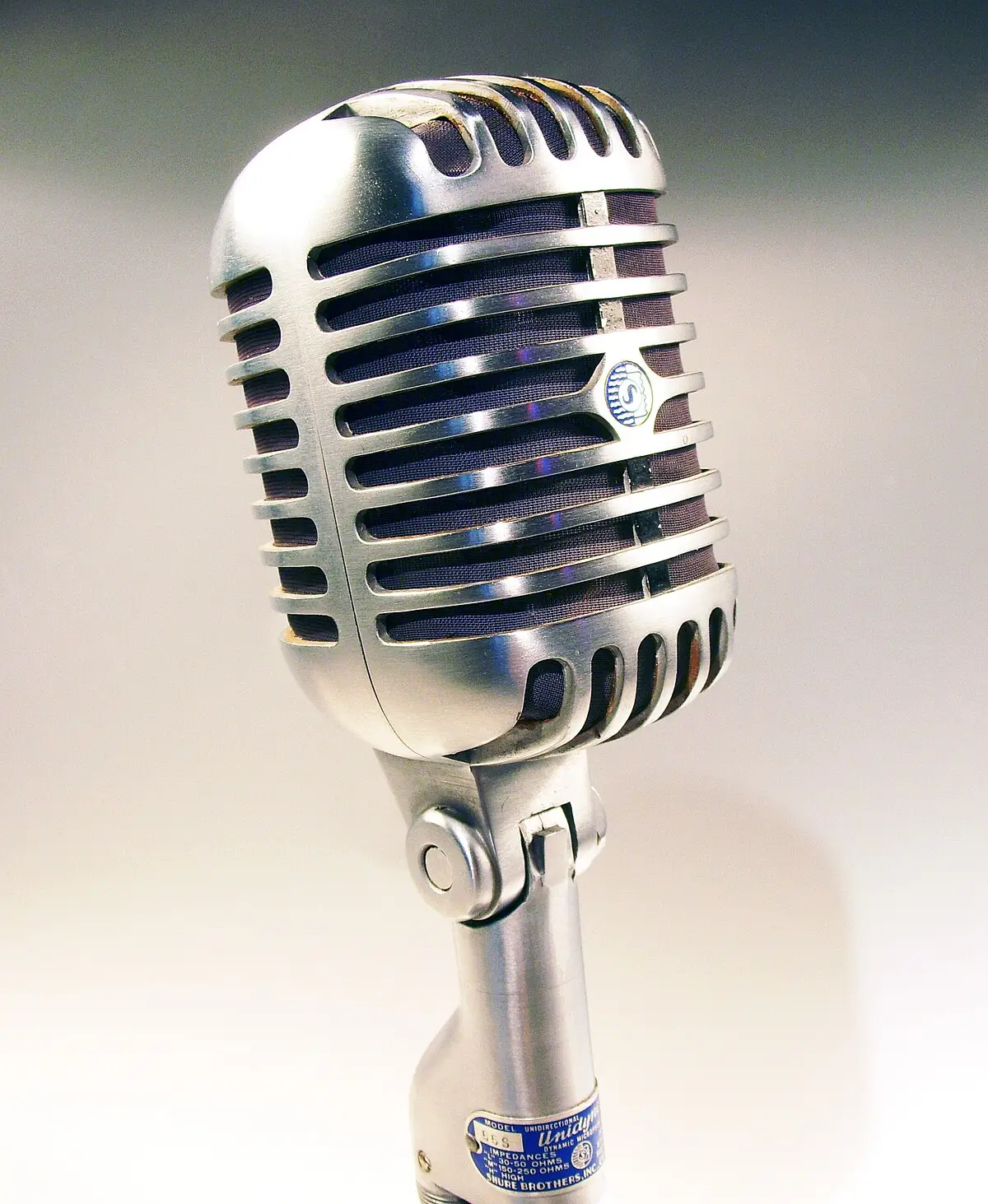
Jesse! Great questions, and you’re right about the way cardioid and omni polar patterns pick up sound, with cardioid picking up sound from the front of the mic/capsule and omni picking up sound from the front, back and sides of the mic/capsule.
But … it’s important to understand that regardless the polar pattern, these mics output a mono signal. An omni mic WILL capture sound on all sides, giving you a non-directional representation of the room, for example; however, it will be a mono recording of the room … unless you use two or more mics and pan them anywhere other than center.
In the case of an omni mic when we listen to the recorded audio on a stereo playback system, the sound does come out of both speakers but equally so, thus it is mono. One mic – even when in omni, picking up sound from all sides – can never reproduce stereo sound. Gotta have 2 or more mics to recreate the stereo image you hear with your two ears 😉
Does that make sense? I’m realizing while typing just how odd and difficult these concepts are to write about. Much better to demonstrate with sound and/or video! 🤘
-
Ooh, sick – thanks, Jesse!! I can’t wait to hear what new sounds and shredding synth lines you come up with using this new technology!
Dropping a link here as well if anyone wants to dive deeper:
-
I will definitely defer to @-PT on this one, but from my experience:
- FOH should absolutely give you both L/R channels of your laptop (NOT just arbitrarily pick one). If FOH is running your monitor via console Aux Send 1 for example, they would send equal amounts of Left and Right to Aux 1 so that you’re getting both sides summed to mono in your wedge.
- You could always touch base w the FOH engineer and say something respectful like, “I’m sure you’re already doing this, but is it possible to get both sides of my laptop into this mono wedge? You rule – thank you!”
- Or, as part of your baller rider, you could require 2 stage wedges for stereo monitoring 🤑
-
Dana Nielsen
AdministratorMay 7, 2024 at 1:31 am in reply to: How does Kevin Parker (Tame Impala) get that sound!!!???David! I love this query so much! And yeah, Kevin Parker is a badass. Honestly, I didn’t even realize he was behind those new Dua Lipa songs – what a cool pairing of peeps!
I also really dig how you put together this playlist chronologically. So fun to hear his sound thru the years. Definitely a common style thread throughout (boom-bap hip hop inspired beats mixed with 70s ELO-style psych pop mixed with 80s synth pop and new wave … mixed with disco basslines and his signature ethereal vocal textures … at least, that’s my knee-jerk summary/description).
I feel like you can also hear the evolution of the sonics or presentation (aka mixing) of his sound throughout the years as well. More popularity, bigger budgets, fancier mixers? Or perhaps he mixes his own stuff .. I can’t recall but will dive into those details for sure (🤔 if only f#$*ing Spotify would share those album credits with us I wouldn’t have to leave their platform to find basic recording info)
My guess is, to get those sounds, he’s choosing instruments (and the treatment of those instruments – selection and tuning of drums for example) that are specific to the eras of recorded music that he most admires, and then continues to refine that era/mood-driven approach through the choice of microphones and recording techniques, including post-processing and mixing.
I love producing recordings that are an homage to a certain era. Here’s one that comes to mind from a hilarious soundtrack I produced/recorded/mixed for the zany Spanish language Will Ferrell film Casa de mi Padre. While recording and mixing the song ‘Luv Butts’ I was referencing my vinyl copy of the Grease soundtrack – specifically the Frankie Valli title track.
I’ve added that song and a few others to a quick “Sounds of an Era” playlist that features songs I mixed to sound like a certain era. Love My People is a track I treated to sound like 60s funk soul samples even tho it’s all live players together in a studio circa 2015. Yo No Se is an homage to vintage Cuban jazz records. For 123 I was referencing Phil Spector’s ‘wall of sound’. (FUN FACT: all but the Pom Poms and Grease songs also feature several of our fellow Protégés co-producing and/or performing! 🤯)
In each of those cases I studied the EQ, panning, and saturation profiles of their given inspired era – from the instruments, how they’re mic’ed, the room they’re in, how they’re “blown up” on their way into pro tools via overdriven preamp or compressor, and then lots of filtering, EQ’ing, and shredding to taste during the mix to get the record to sound like my favorite references.
I have a feeling that’s exactly what Mr. Parker does too … following that ‘favorite record’ sound in his heart, in his ear, and shaping it into existence by any means necessary, analog or digital.
Ok, I’ve blathered on long enough, and I realize I didn’t give any specific suggestions specific to the tracks in your awesome playlist. Perhaps more later! And I look fwd to hearing what others here think!! 🤓
-
Dana Nielsen
AdministratorApril 17, 2024 at 3:16 am in reply to: Nearfield vs Mid Field vs Far Field Monitors and Mixing/MasteringAs @-PT mentioned, excellent questions, sir!
- I tend to stick to one main set of nearfield speakers I really know and trust (my ATC 45’s are large enough to be considered mid-field, tho I position them at near-field range)
- I always have a subwoofer and it is ALWAYS on a separate button on my Avocet monitor controller. It stays off 99.9% of the time but it’s nice to be able to push the “sub” button and hear what might be flopping around down there needing finer tuning. Or sometimes I turn it on and crank the system up super loud for “club mode.”
- I always have (and depend on) a set of crappy Radio Shack Realistic speakers placed way out of the sweet spot on the other side of the room, pushed together so they’re mono. This inexpensive yet essential setup gives me the feeling of “listening from another room” which is always revealing, and it also gives me a sense of what my mix will sound like on laptops and small budget systems.
- Of all the fancy studios around the world I’ve worked in, I have yet to encounter “mains” that I like to listen to. I’m fairly certain their only purpose is to excite label reps who drop by during sessions.
This forum discussion has pix of my Realistic speakers as well as my old beloved 5″ Yamaha nearfields I started my career on (and mixed a #1 album on 😲). It also details my 4-step process to declutter any mix. In fact … I turned that 4-step process into a handy pdf but never shared it … until now! Mua hah ha ha haaaa. I’ll attach it here for the time being as a fun little Easter Egg. Enjoy!
-
Dana Nielsen
AdministratorApril 16, 2024 at 2:10 am in reply to: How Important Are Reference Songs to You when it comes to Mixing?Whelp … I didn’t realize my video capture settings got changed to the “1998 AOL Dial-up Modem” preset 🤦🏻♂️ but hopefully the audio commentary will make up for the lackluster pixelated video quality, lol.
Wanted to touch on your excellent questions with a quick vid reply while I consider making a more in-depth video about this topic.
Would a longer deep-dive “reference mix” video be interesting or helpful to anyone else here? Please rate your level of interest using ear emojis, lolol.
👂👂👂 = VERY interested!
👂 = kinda interested
🦻 = i’m in, as long as there are captions -
Dana Nielsen
AdministratorApril 14, 2024 at 11:50 pm in reply to: How Important Are Reference Songs to You when it comes to Mixing?Oooh ooh ooooh! I love these questions so much and have so much to add – gonna circle back in the next day or so w some thoughts and suggestions as well as my own process and tools for referencing.
I also look fwd to reading replies and suggestions on this topic from others here in the MP fam! Please chime in y’all with any of your fav tips, thoughts, and/or additional questions! ⚡️⚡️
-
Hahahah – brilliant post and excellent insights, Paul!
-
Dana Nielsen
AdministratorMay 9, 2024 at 11:26 pm in reply to: How does Kevin Parker (Tame Impala) get that sound!!!???My pleasure man! And thanks!
And, ooh, that would be a fun vid to make .. breaking down one of those 2 amazing tracks (was just re-listening to them both – so freaking good, head-bobbing, musically-and-production-ally refreshing!)
-
Dana Nielsen
AdministratorApril 26, 2024 at 11:56 pm in reply to: How Important Are Reference Songs to You when it comes to Mixing?Yeah man, wild re different audio codecs for different tiers, right? I knew about this but had forgotten about it before playing around with Streamliner where they let you hear the difference between the free and premium codecs on each platform. It does make a big difference!
Another badass feature is by enabling the “Artifacts” button it will solo the artifacts so you can really hear what’s being lost (errr .. added as the case may be). It’s helped train my ears to hear that stuff and is pretty dang helpful to be able to preview those artifacts while mixing in realtime.
Tidal DOES have a hifi plan, and as of just a few weeks ago they stopped charging more for it!!!! It was such a fun day when I got that email that said “your paid plan now includes HiFi for no additional money” – i mean … gotta love when a company says “here, have more for the same price, you’re welcome”. There’s a whole lot more to love about Tidal too – it’s my fav. I even made a video about it a while back because I’m so thankful they’re surprisingly still the only DSP I know of who display full album credits.
Re platform-specific mastering … nah, not that I’m aware of. I’ve worked with tons of heavyweight mastering engineers on big budget records and there tends to be a single “digital master” and not one for Spotify and one for Apple, etc. Several years ago, “Mastered for iTunes” was a big deal and I think you had to get certified (and maybe even pay for the ability to use that moniker?), but in my experience lately that stuff doesn’t come into play. It’s just “digital master” and if applicable “vinyl master” and “ATMOS master”. That said, it’s entirely possible that after I’m done with a project the label steps in directly with the mastering engineer and requests all kinds of platform specific deliverables I have no knowledge about lol – but i don’t think that’s the case.
-
Dana Nielsen
AdministratorApril 25, 2024 at 1:41 pm in reply to: How Important Are Reference Songs to You when it comes to Mixing?Hey man!
Great questions and observations about streaming sound quality when used as reference mixes.
In general, I don’t worry too much about that since I’m not spending much time listening to the references while mixing – I just spot check very quickly, get a blast of quick inspiration about frequency response or vocal/snare balance or low end etc, and then I pop back over to my mix.
I’m also not loading my streaming references into an analyzer like Ozone which can match and apply similar settings, tho I could imagine that’s a helpful tool! If you are doing that as part of your process I understand your concern about the loss of finer audio details in streamed files.
Also worth noting: streaming services always deliver higher quality audio to paying subscribers. For me, as a paying schmuck of like half-a-dozen premium streaming services, I find they all sound pretty fantastic (and I always have Normalization setting set to OFF). If, however, you’re referencing audio from a free-tier or add-supported tier of a streaming platform you may very well hear poopy audio degradation.
For references that I really love and/or are critical to a specific job, I tend to purchase the ref off the iTunes store and drop the full-res file into my client folder where I can drag it into ADPTR Metric A/B or straight into my session timeline.
Another fascinating invaluable tool by ADPTR is Streamliner which allows you to preview your mix in realtime using all the popular streaming platform codecs, both free- and premium-tier codecs.

plugin-alliance.com
NEW VERSION 1.1 - Codec auditioning, automatic level matching, and state-of-the-art loudness and dynamics metering to get the perfect master for all major streaming services.
-
Dana Nielsen
AdministratorApril 18, 2024 at 12:41 am in reply to: How Important Are Reference Songs to You when it comes to Mixing?Jeremy! Awe, that’s awesome that a) this vid was timely, and b) you’re as keen on references as am I! “Beatles cuz .. Beatles” 😂
Love that you have your hotkeys set up to reference your fav tracks in Ableton, that’s super slick. The only thing I’m always careful of when my reference tracks and my current mix share the same set of outputs is that I never want my reference tracks to flow through my master bus processing. Know what I mean? So if your mix is coming out a master fader with a bunch of limiters and eqs and that master fader is assigned to physical outputs 1-2, and your refs are also coming out 1-2 when solo’ed, I’m always triple-checking that the master bus inserts are bypassed and/or not effecting the reference tracks using the same outputs. Dig? (I’m sure you’re already on top of this, but thought I’d mention this easy mistake we’ve all made for sake of anyone else reading). 🕺🏻
PS – also, so stoked u dug the Ari podcast – thanks for listening!! 🙏🏻
-
Dana Nielsen
AdministratorApril 16, 2024 at 1:25 am in reply to: Now that we’ve slid into the Sonarworks/headphone mixing domain, has anyone used Slate VSX?Hahaha, touché!
-
Dana Nielsen
AdministratorApril 16, 2024 at 1:24 am in reply to: Tube-Tech CL 1B Compressor for Vocals??Ooh, yeah, the double-compressor combo-punch of the 1176 AND LA2A is a lot of fun! Especially when the singer has a huge dynamic range (whispery soft verses into ripping loud choruses). These days, when tracking live with compressor(s) on the front end of the signal path before digital conversion, if I need that double-comp scenario I’ll reach for a lightning fast Distressor to do the heavy lifting and then a CL1B after that for some final slow ‘n’ gentle smoothing.
NOTE: lest I give the unintended impression that I’m constantly double-compressing things on input I should mention that, for me, this technique is fairly uncommon. 99% of the time I’m fine using 1 compressor on the input chain. But in the right situation the double-up is perfect!
And H-Comp – nice! I forgot about that oldie but goodie … gonna bring that back into rotation!
Social Media