“How do you handle reverb on an acoustic group like the Avett Brothers? Guitar, banjo, fiddle, bass — all recorded separately in different cities.
If I keep everything dry it feels a little lifeless. But as soon as I add room reverb… it turns to mud.”
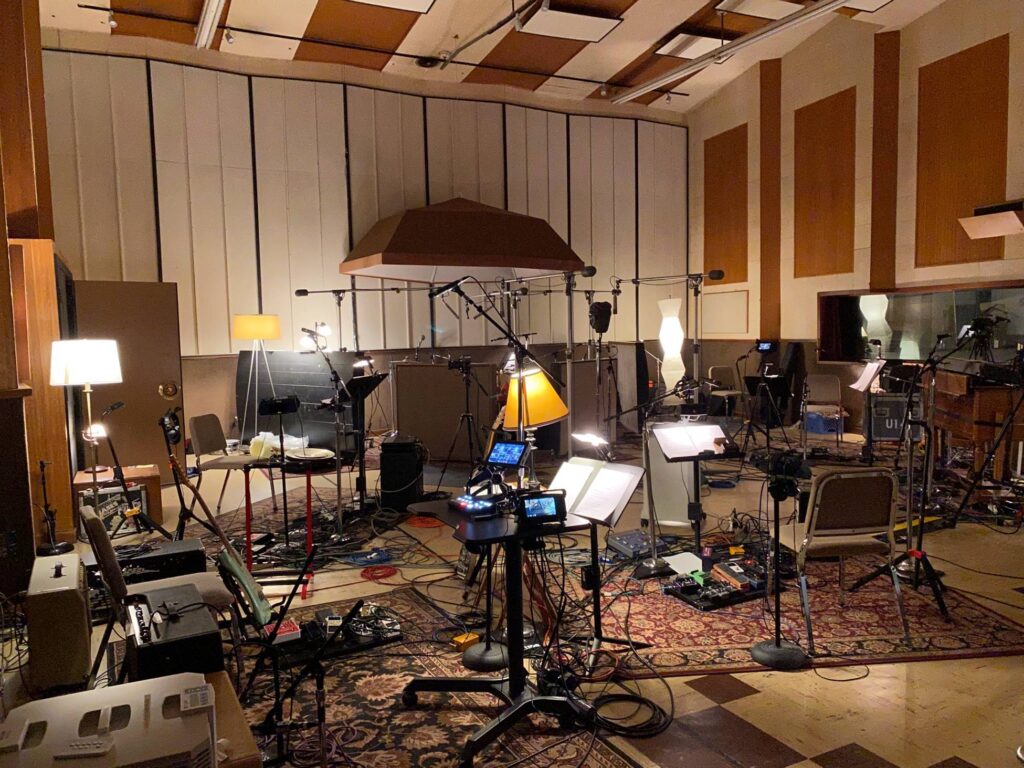
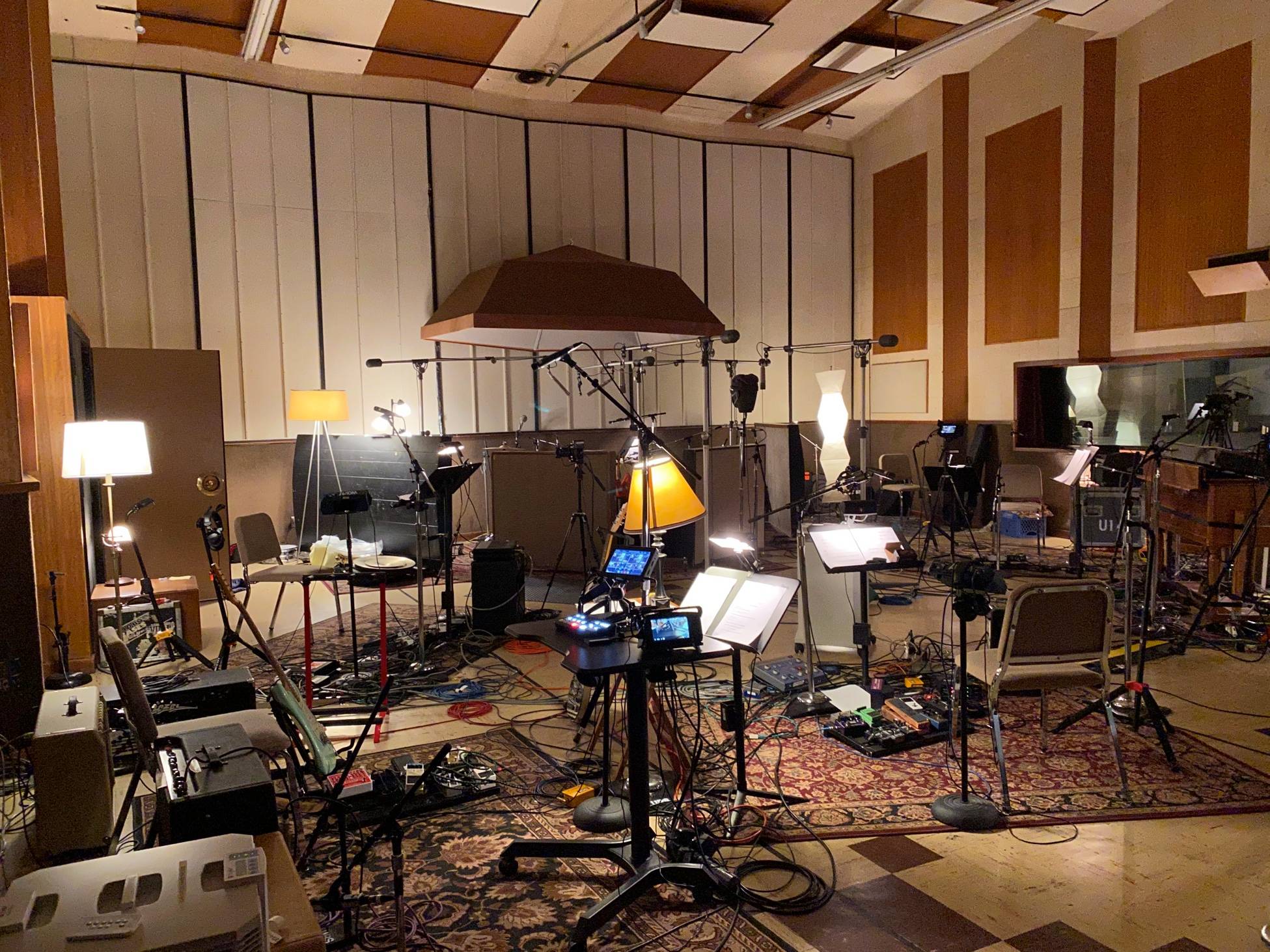
One of my session setups in Studio B at United Recording — one of my favorite rooms for natural acoustic ambience.
If you’ve ever mixed acoustic instruments that weren’t recorded in the same room at the same time, you’ve probably run into this exact problem too.
No shared room. No natural mic bleed. Just a bunch of clean tracks that don’t quite feel like they belong together yet.
So how do you create the illusion of a shared acoustic space without turning the mix into soup?
Here are a few tricks that came out of that forum thread — the same ones I use on sessions like this.
1️⃣ Think “felt, not heard”
In these situations, the best reverb is often extremely subtle.
Something you might notice on headphones… but barely perceive on speakers.
You’re not trying to hear the reverb — you’re trying to feel that the instruments exist in the same environment.
This usually means:
Short room-style reverbs
Low send levels
Careful EQ on the return
2️⃣ High-pass the reverb return
One of the fastest ways reverb turns muddy is when the low end builds up inside the verb.
A simple trick:
👉 High-pass the reverb return.
Try starting around 150 Hz and adjust from there.
You’ll keep the sense of space, while avoiding that indistinct low-end cloud.
Sometimes I’ll also roll off some highs on the return to keep things natural.
3️⃣ Use pre-delay to keep clarity
Pre-delay can make a huge difference with acoustic mixes.
What it does:
It allows the dry sound to arrive first, and the reverb to appear a few milliseconds later.
That tiny delay keeps the source clear and present, while still giving you space.
Experiment with pushing it further than you expect — you might be surprised how much separation it creates.
4️⃣ Send instruments different amounts of reverb
Every instrument doesn’t need the same amount.
In fact, varying send levels is one of the easiest ways to create depth in a mix.
For example:
Lead vocal → very little room
Background instruments → a bit more
Percussion elements → sometimes quite a lot
More reverb can make something feel farther away in the soundstage.
5️⃣ Use aux sends (not inserts)
A quick workflow tip:
Instead of inserting reverb directly on each track, send tracks to a shared reverb aux return.
Benefits:
Better control
More realistic shared space
Much more efficient CPU usage
Set the reverb itself to 100% wet, and control the blend with your send levels.
6️⃣ A quick gain-staging tip
Someone also asked a great follow-up:
“Is it different if I turn up the send level vs turning up the return fader?”
In a simple digital setup with one send and one return, the result is the same.
But once multiple tracks feed the same return, things get more complex.
A good starting workflow:
Keep return faders at unity (0 dB)
Use send levels to dial in each instrument
Then adjust the return fader for overall reverb balance if needed
Conversations like this are one of my favorite parts of the Mix Protégé community.
Someone asks a thoughtful question… a few engineers jump in with ideas… and suddenly everyone walks away with a few new tricks to try on their next mix.
There’s a lot more detailed advice in the full forum thread — including one of my favorite plugins for creating a realistic room sound.
Dana Nielsen is a Grammy-nominated mixer, engineer, producer, and multi-instrumentalist known for his work with SZA, Rihanna, Adele, Post Malone, The Smashing Pumpkins, Neil Young, Justin Timberlake, Weezer, The Avett Brothers, Bob Dylan, and Kanye West. A frequent collaborator with legendary producer, Rick Rubin, Nielsen has amassed credits that run the stylistic gamut from Neil Diamond to Slayer and just about everything in between.
In this livestream event, Dana Nielsen from Mix Protégé and indie-folk artist Cammy Kurtzman collaborate to achieve a warm, intimate vocal sound for Cammy’s song “Tangible.”
A Better Finder Rename by publicspace.net is a powerful batch renaming tool for Mac OS that is time-saving, inexpensive, and indispensable for audio professionals!
by Dana Nielsen Hey Reader! Ever wondered how I use reference tracks or manage my mix bus before mastering? 🤔 This week at Mix Protégé, we’ve been unpacking these questions with practical insights and real-world examples. Catch up on these vibrant discussions, member achievements, and the exciting new releases I’ve mixed for The Avett Brothers and Nir Felder. Let’s gooooo! 👂How important are reference mixes? This burning question in our Mixing Forum got me all fired up! 🔥 Check out my video…
Please note:
This action will also remove this member from your connections and send a report to the site admin.
Please allow a few minutes for this process to complete.










Responses